Sports guide
Analyzing Rebounds in Basketball Season
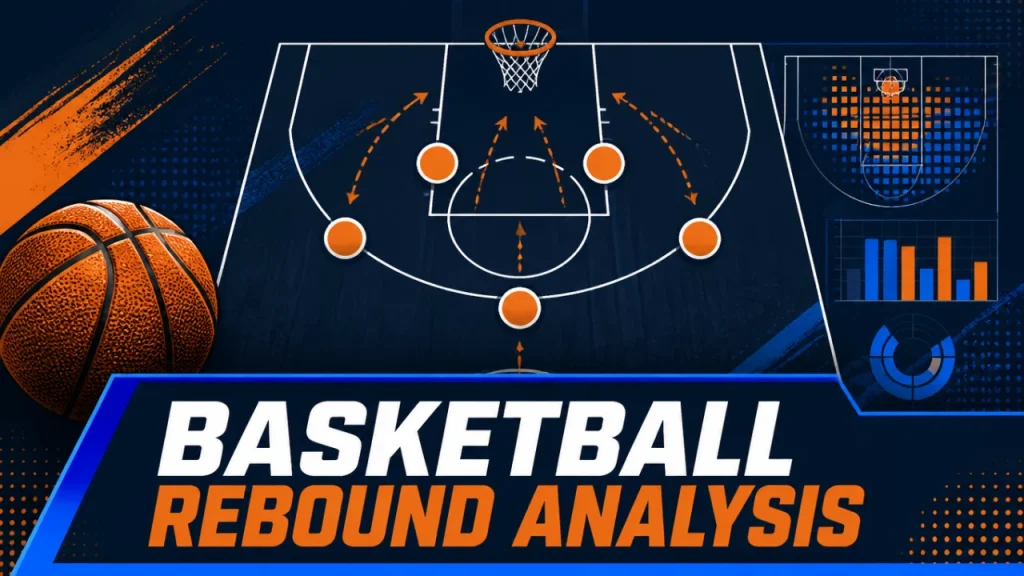
Rebounding is a fundamental aspect of basketball that significantly influences game outcomes, extending beyond mere statistics to impact team strategy and momentum. This analysis delves into the nuances of rebounding, differentiating between offensive and defensive boards and explaining how each contributes to a team’s success throughout a basketball season. Understanding these dynamics offers a deeper appreciation for the strategic depth of the sport.
The Two Types of Rebounds: Offensive vs. Defensive
In basketball, a rebound occurs when a player gains possession of the ball after a missed shot. These are broadly categorized into two distinct types: offensive rebounds and defensive rebounds, each carrying different implications for game flow and team performance.
Offensive Rebounds: Second Chances and Extended Possessions
- Definition: An offensive rebound happens when a player from the shooting team recovers the ball after their own team’s missed shot.
- Impact: Securing an offensive rebound grants the shooting team a crucial second chance to score, effectively extending their possession. This can be demoralizing for the opposing team, as they had successfully defended the initial shot only to concede another scoring opportunity.
- Strategic Value: Teams that excel in offensive rebounding often create more scoring attempts per possession, putting constant pressure on the defense. This can lead to easier put-back shots, fouls against the defense, or opportunities to reset the offense for a better shot. For example, a team that frequently gets offensive boards might compensate for a lower shooting percentage by simply having more chances to score.
Defensive Rebounds: Ending Possessions and Transition Opportunities
- Definition: A defensive rebound occurs when a player from the non-shooting team recovers the ball after the opposing team’s missed shot.
- Impact: Defensive rebounds are vital for ending an opponent’s possession and preventing them from getting second-chance points. Successfully securing the defensive board allows a team to transition from defense to offense.
- Strategic Value: Strong defensive rebounding is the foundation of a solid defense. It prevents opponents from accumulating extra scoring chances and allows a team to initiate fast breaks or set up their half-court offense without delay. A hypothetical team with excellent defensive rebounders can quickly turn an opponent’s miss into a scoring opportunity on the other end of the court, showcasing the importance of securing the ball.
Analyzing Rebounding’s Impact on Game Momentum
Beyond the statistical count, rebounds significantly influence the momentum of a basketball game. A series of offensive rebounds can frustrate a defending team, leading to breakdowns in their defensive scheme. Conversely, consistent defensive rebounding can build confidence and fuel transition offense, shifting the psychological advantage.
- Momentum Swings: Imagine a scenario where one team misses several shots, but repeatedly secures offensive rebounds, eventually scoring. This sequence can energize the offensive team and deflate the defensive team. The ability to control the boards often dictates who dictates the pace and rhythm of the game.
- Strategic Adjustments: Coaches frequently emphasize rebounding, making strategic adjustments based on a team’s performance on the glass. If a team is struggling to secure defensive rebounds, a coach might deploy taller lineups or implement specific box-out drills to improve their effectiveness. Similarly, if a team is dominating the offensive boards, they might be encouraged to take more calculated risks on offense, knowing second chances are likely.
Limitations and Nuances in Rebound Analysis
While crucial, simply counting rebounds doesn’t always tell the whole story. Factors such as shot location, defensive schemes, and opponent strength can all influence rebounding statistics. A team might have fewer total rebounds but still be highly effective if they consistently secure critical defensive boards at key moments or convert their offensive rebounds into scores efficiently.
For instance, a team that forces opponents into difficult, contested shots from long range might naturally have fewer defensive rebounds available under the basket compared to a team that allows more close-range attempts. Therefore, analyzing rebounds requires looking beyond raw numbers to understand the context of how and when they are obtained, and their ultimate impact on possessions and scoring.
AI-generated illustrative image. It does not depict a real match.